
Buying Quality Firewood in Sydney: Species, Seasoning, Storage and the Law
Firewood is one of the few purchases where the same product, badly chosen, will cost you more in heating efficiency, chimney maintenance and neighbour complaints than the wood itself. The variables are species, moisture content and measurement, and only one of those is visible in the back of a delivery ute. This guide covers what to buy, how to verify it is genuinely seasoned, what a legitimate volume looks like, how to store it, and the air quality rules that increasingly shape the whole conversation.
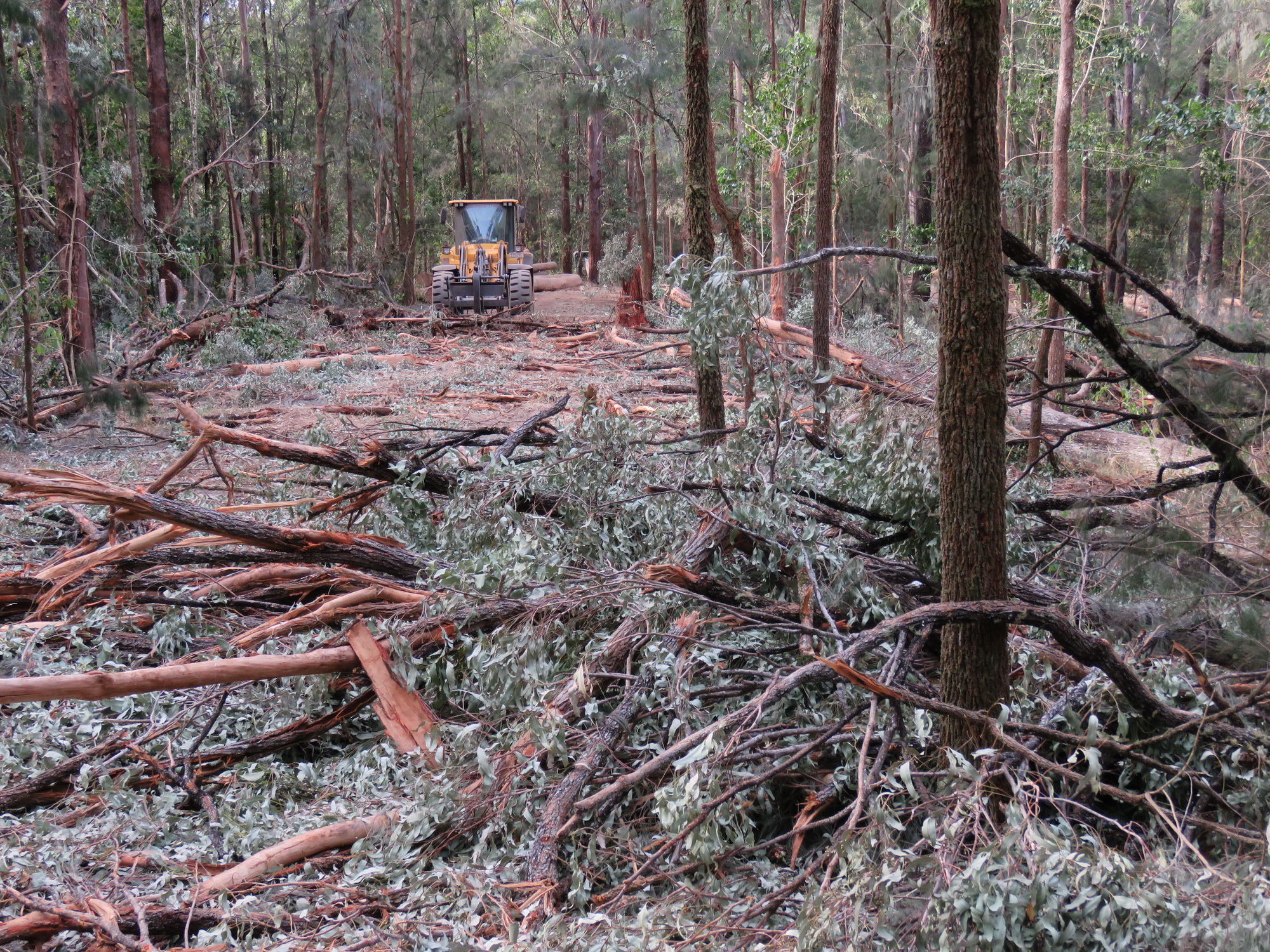
There is also a strong link to tree work. Removals generate large volumes of hardwood, and buying from a local arborist is often the best value available, provided you understand that fresh timber needs a year or more before it belongs in a heater.
Species: what to burn and what to avoid
Dense Australian hardwoods are the benchmark because they carry more energy per unit volume and burn longer. River red gum is the market standard: high heat, long burn, good coal bed. Ironbark is denser again and excellent for overnight burns. Grey box, yellow box and spotted gum all perform strongly. Stringybark lights readily and suits shoulder-season fires. Avoid softwoods such as pine, cypress and fir for indoor heating: low density, fast burn, high resin content and rapid creosote accumulation in the flue. Never burn treated, painted, laminated or reclaimed construction timber, which releases genuinely toxic combustion products.
Moisture content is the whole game
Properly seasoned firewood sits at fifteen to twenty per cent moisture. Freshly felled hardwood can exceed fifty per cent. Burning wet wood wastes a large share of the energy evaporating water instead of heating the room, produces heavy smoke, and deposits creosote that is the primary cause of chimney fires. It is also the main driver of wood smoke complaints. Buy a moisture meter for the price of a bag of kindling and test a freshly split face rather than the weathered outside of a log. If the seller objects to you testing, that is your answer.
Seasoning times, realistically
Softwoods need six to twelve months split and stacked. Most hardwoods need twelve to twenty-four months. The densest species, ironbark among them, are better at eighteen to thirty-six months. Splitting before stacking is not optional: bark is a moisture barrier and round logs season at a fraction of the rate. Rounds sitting under a tarp for one Sydney winter are not seasoned firewood no matter what the advertisement says.
Buying from tree services
Arborists generate hardwood continuously and frequently sell it cheaper than dedicated merchants because it is a by-product rather than a business line. The trade-off is that most of it is green. Buy it at green prices, split it, stack it properly and burn it the winter after next. If you need wood for this weekend, buy certified seasoned product from a merchant instead and treat the arborist supply as next year’s stock.
Volume, measurement and price
Firewood in Australia is sold by volume, normally the cubic metre, and this is where most disputes arise. A loose-thrown cubic metre in a trailer contains materially less wood than a neatly stacked cubic metre, because air fills the gaps. Ask whether the quoted volume is stacked or loose, ask for the dimensions of the load, and measure it on arrival. Indicative Sydney pricing runs roughly $280 to $500 per cubic metre for bulk seasoned hardwood, $400 to $650 for premium well-aged species, $6 to $14 for a small bag, and $4 to $9 for kindling bundles, with delivery frequently additional. Consumer protections including accurate measurement and description are administered by NSW Fair Trading, and legitimate suppliers can be verified through the Australian Business Register.
Air quality and the rules that apply
Wood heaters are a major contributor to fine particle pollution in Sydney during winter, and the regulatory direction is only tightening. The NSW Environment Protection Authority sets emission and efficiency requirements for new heaters and works with councils on smoke complaints, and some councils have introduced local controls on installation. Health effects of wood smoke exposure, particularly for people with asthma and cardiovascular conditions, are documented by NSW Health. Practical guidance on efficient heating, including how wood heaters compare with alternatives, is published by energy.gov.au. Burning dry wood hot, not damp wood slow, is the single biggest lever you control.
Storage that actually works
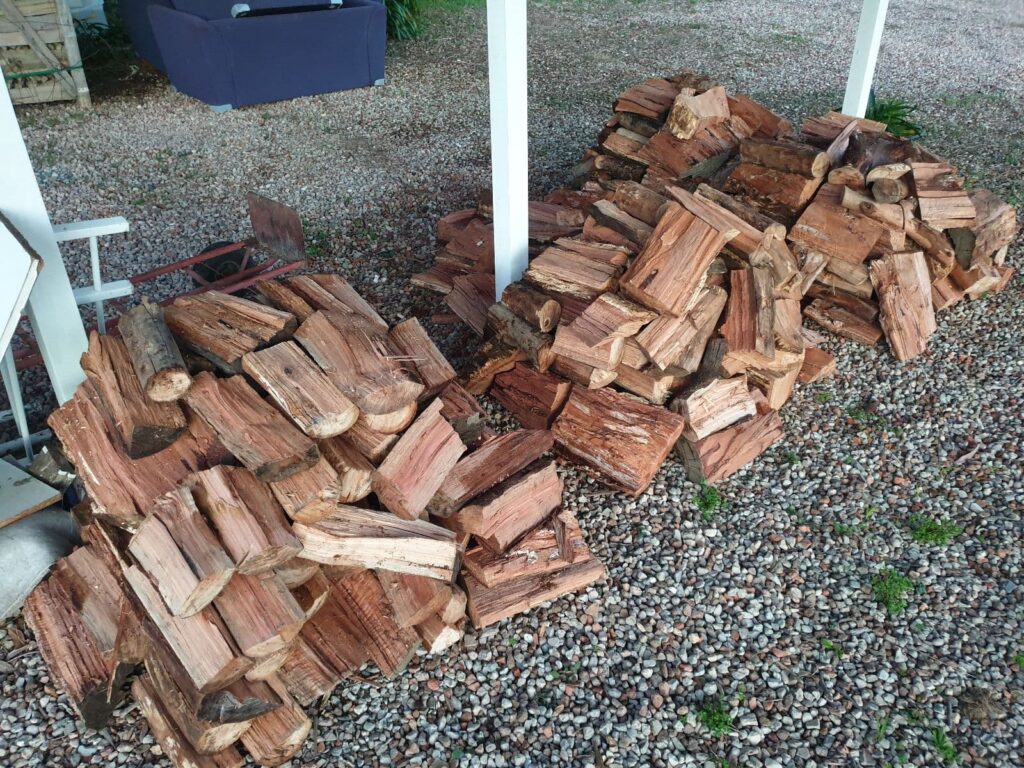
Stack off the ground on pallets or bearers to stop moisture wicking up. Cover the top only and leave the sides fully open, because a fully wrapped stack traps humidity and grows fungi rather than drying. Orient the stack to catch prevailing wind and afternoon sun. Keep it at least a metre from the house for termite and fire reasons, and clear of the wall so air can move behind it. Rotate stock so the oldest wood burns first, and bring a few days’ supply inside to finish drying before use.
Sourcing responsibly
Standing dead trees and large fallen logs are critical habitat: hollows take a century to form and are used by a long list of native birds, bats, possums and reptiles. Collecting firewood from bushland, reserves and roadsides is restricted or prohibited across New South Wales, and habitat loss from firewood collection is recognised as a threatening process. Information on native vegetation and habitat protection is published by NSW Environment and nationally by the Department of Climate Change, Energy, the Environment and Water. Urban tree removals and plantation thinnings are the ethical supply. Buy locally to cut transport emissions, ask where the wood came from, and be sceptical of any supplier who cannot answer.