Professional Tree Trimming Services: Keeping Sydney Trees Healthy and Safe
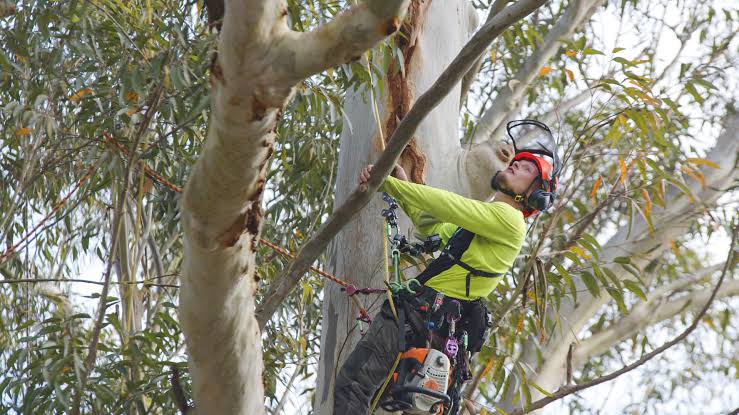
Trimming is the maintenance work that prevents the emergencies. A tree pruned correctly every few years rarely drops limbs, rarely needs removal before its time, and rarely turns into a dispute with a neighbour. A tree left alone for twenty years and then cut hard becomes all three. The distinction that matters is not trimming versus pruning, which are the same activity described in different registers, but trimming versus topping.
This guide sets out the recognised trimming types, why the standard governs the outcome, what it costs in Sydney, when to do it for each tree group, and how to specify the work so you get what you paid for.
What professional trimming sets out to achieve
Every cut has a cost to the tree, so competent tree trimming sydney removes the minimum required to meet a defined objective: eliminate deadwood and hazardous limbs, reduce end-weight on over-extended branches, restore clearance to a building or driveway, improve light and air movement through the crown, correct a developing structural fault, or manage overall size. “Tidy it up” is not an objective. If your quote does not name one, the crew will invent theirs on the day.
The recognised trimming types
Deadwood removal
Dead, dying, broken and hanging material is removed. Lowest impact, highest safety return, and often all a mature tree needs.
Crown thinning
Selective removal of interior, crossing and duplicated branches reduces density without altering the outline. Lowers wind loading and improves light penetration.
Crown lifting
Lower limbs come off to create clearance over paths, driveways or roofs. Best done gradually on young trees rather than all at once on mature ones.
Crown reduction
Height and spread are reduced by cutting back to suitable laterals, retaining natural form. This is the legitimate answer to an oversized tree and the direct alternative to topping.
Formative pruning
Structural work on young trees to establish a single dominant leader and well-spaced scaffold branches. The cheapest arboriculture you will ever buy, and it eliminates most problems before they exist.
The standard that governs the work
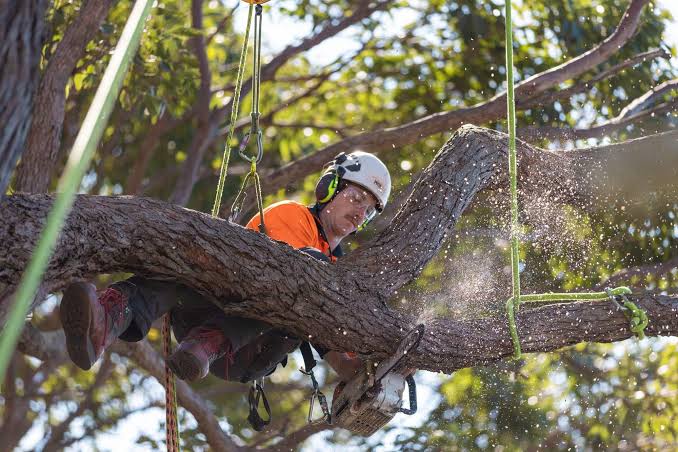
Australian Standard AS 4373, Pruning of amenity trees, defines these types, specifies cut placement relative to the branch collar, and caps how much live crown may be removed at once. Sydney councils reference it in tree management controls and in permit conditions; the City of Sydney publishes guidance for residents and arborists that ties the standard to practical decisions about who should do the work. Training against the standard runs through TAFE NSW, graded under the Australian Qualifications Framework.
Why this is not a DIY job
Anything requiring a ladder, a chainsaw above shoulder height, or work near an electrical service is beyond safe amateur reach. Tree work is classified as high-risk activity by SafeWork NSW, with duties covering fall protection, exclusion zones and approach distances to overhead assets. Beyond safety, the technical failures are consistent: flush cuts that destroy the branch collar, stubs that never seal, over-removal that triggers epicormic growth, and cuts made with blunt tools that tear rather than sever. All are invisible on the day and expensive in five years.
Permits apply to trimming too
Many owners assume consent is only needed for removal. In most Sydney council areas, pruning beyond a defined threshold requires the same permit, and the framework is SEPP (Biodiversity and Conservation) 2021 applied through your local development control plan, lodged via the NSW Planning Portal. Where the tree is next door, the Trees (Disputes Between Neighbours) Act 2006 applies and consent still does not authorise entry onto their land.
Timing by tree group
Deciduous exotics are best pruned in late winter while dormant, when structure is visible and wound closure follows quickly with spring growth. Spring-flowering ornamentals are pruned immediately after flowering to preserve next season’s buds. Eucalypts and most Australian natives tolerate late winter to early spring, avoiding the peak of summer heat stress. Palms need only dead frond removal, never a haircut into the crown. Deadwood and genuine hazards are removed whenever identified, season notwithstanding.
What trimming costs in Sydney
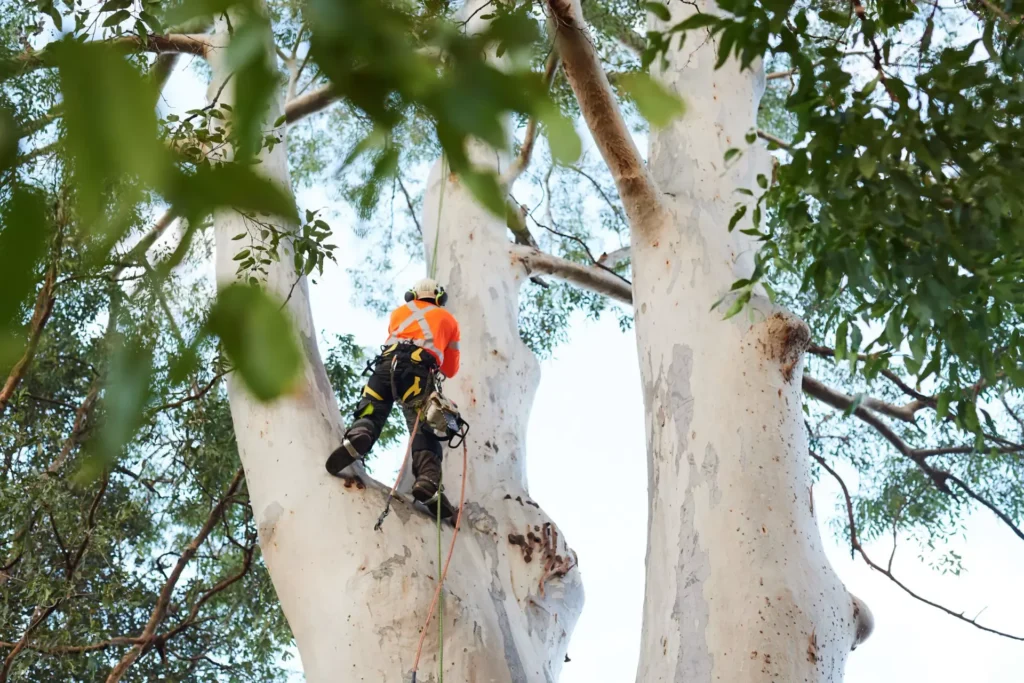
Small trees under six metres with clear access commonly run $300 to $700. Medium trees $700 to $1,500. Large gums, figs and camphors requiring climbing or an elevated work platform typically $1,500 to $3,500, more where traffic control or crane access is needed. Cost drivers are height and access rather than the volume of material removed, which is why a light thin on a big tree can cost more than a heavy reduction on a small one. Confirm debris removal is included, because it is often the missing line.
What you get in return
Structural risk falls, storm damage becomes far less likely, and the tree’s useful life extends by decades. Canopy also does measurable work: research from the Hawkesbury Institute for the Environment has documented substantial temperature differences between shaded and unshaded urban surfaces across Western Sydney, and canopy retention is central to greening policy published by the NSW Department of Planning, Housing and Infrastructure. A well-trimmed tree keeps delivering shade, amenity and property value. A topped one delivers a maintenance bill.
Specifying the job
Ask the contractor to name the AS 4373 pruning type, the target branches or diameters, the percentage of live crown to be removed, who lodges the council application, and how debris is handled. Require AQF evidence and current insurance certificates. Then photograph the tree before work starts. A specification that fits on one page is what separates a trimmed tree from a lopped one.