
Emergency Tree Removal in Sydney: Fast Response to Storm Damage and Hazards
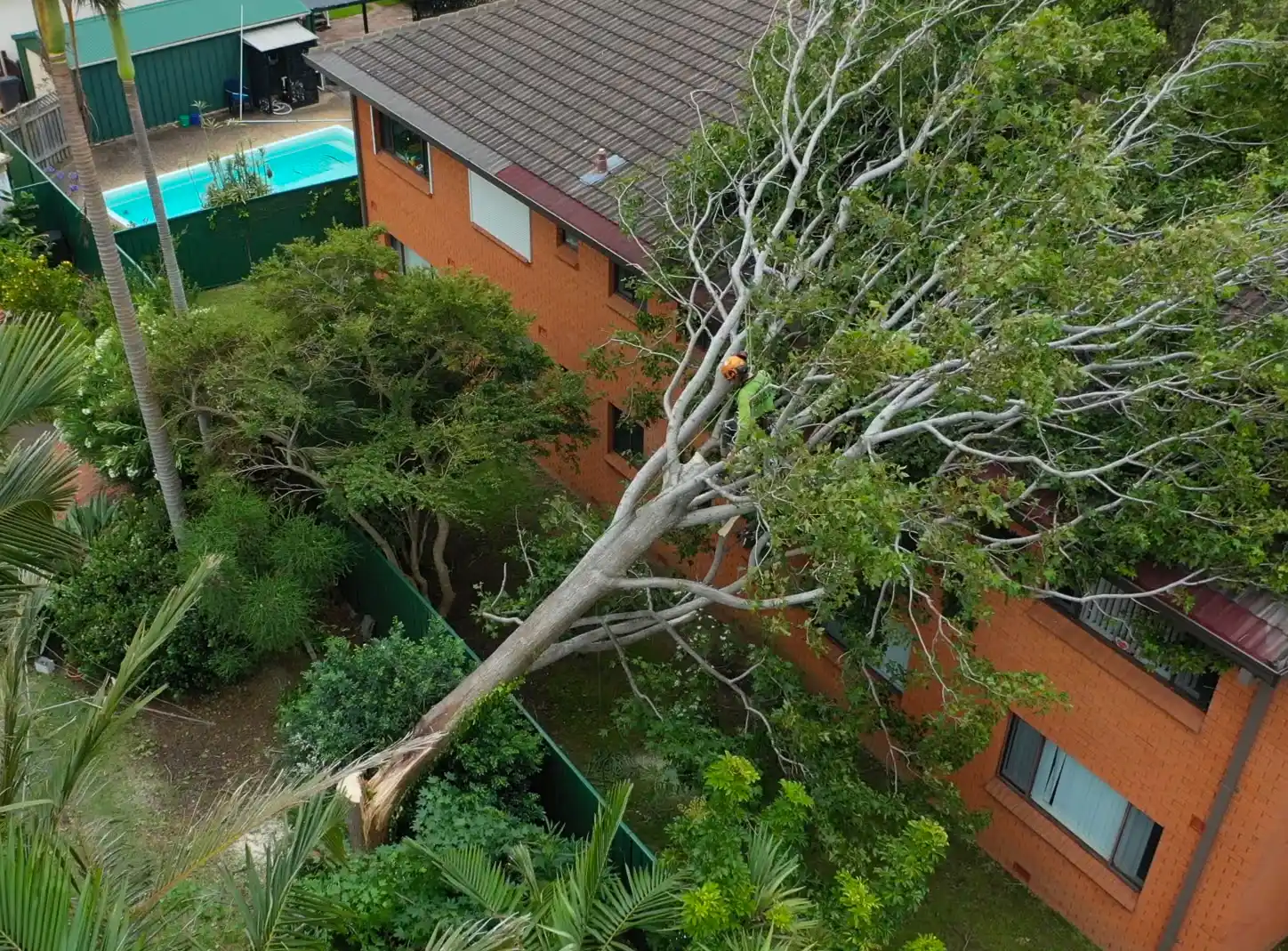
Sydney’s storm season delivers the same sequence every year: an East Coast Low or a summer supercell, damaging wind gusts, saturated soil, and thousands of failed trees by morning. The decisions made in the first hour after a tree comes down determine whether the outcome is an insurance claim handled cleanly or a second, worse incident. This guide covers when to call, who to call first, what emergency crews do, what it costs, and how to document it so your insurer pays.
The single most important rule: if there is any electrical asset involved, nobody touches the tree until the network operator has attended. Not the arborist, not you, not a neighbour with a saw.
What counts as an emergency
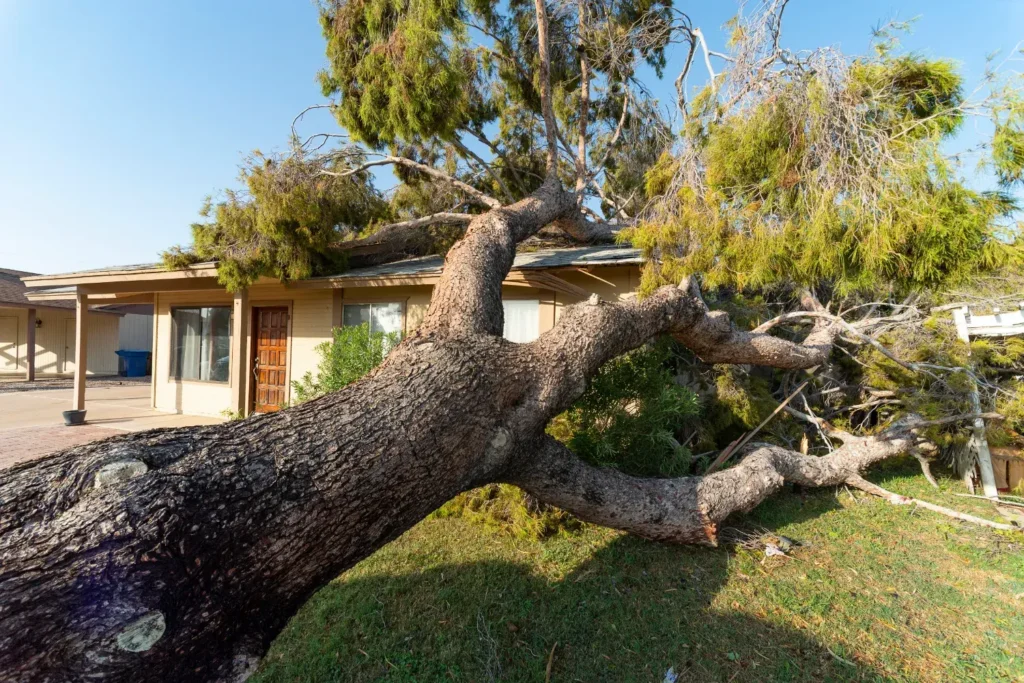
Call immediately for a tree or major limb resting on a building, vehicle, fence or powerline; a partially uprooted tree with soil heave or cracking at the root plate; a hanging limb suspended in the canopy; a split trunk or failed branch union; a tree blocking the only access to a property; or any tree in contact with electrical wiring. Situations that can wait until business hours include minor deadwood, small branches on the lawn, leaf litter and gutter debris, and general storm untidiness.
The first ten minutes
Move people and pets well clear, allowing a distance at least equal to the tree’s height in every direction, since a partially failed tree can settle further without warning. Do not walk under a hung-up limb. Do not attempt to cut anything under tension. If the structure is damaged, shut off power at the mains only if it is safe to reach, and evacuate if there is any doubt about structural integrity. If wires are involved, treat every wire and every wet surface near it as live and call the electricity network operator and emergency services. In life-threatening situations call 000. For storm and flood assistance, the NSW State Emergency Service is the responding agency on 132 500.
Who to call, in order
Electricity network operator first if wires are involved. Then 000 if there is danger to life. Then the SES on 132 500 for storm damage to structures, including trees on roofs. Then your council if the tree removals is on public land, a street tree, or blocking a road. Then your insurer to open a claim and confirm what they require. Then an emergency arborist. Getting this order wrong is how people end up paying for work their insurer would have covered, or worse. Broader disaster assistance and recovery information for New South Wales residents is published by Service NSW and the NSW Reconstruction Authority.
What an emergency crew does
The first task is stabilisation, not tidiness. Crews establish an exclusion zone, assess loading and tension, and use rigging to relieve pressure on the structure in a controlled sequence rather than cutting the obvious piece first. Hung-up limbs are lowered on ropes. Uprooted trees are secured before any cutting begins. Once the hazard is neutralised, they will usually make the site safe and return in daylight for full removal, processing and clean-up, because working at night in wind on a damaged tree adds risk without adding much value.
Safety and competence at 2am
Emergency tree work is the most dangerous work in the industry: unpredictable loading, poor light, wet surfaces, fatigue and time pressure. Duties for high-risk tree work, including approach distances to overhead electrical assets and fall protection, are set by SafeWork NSW. Ask for AQF qualification and insurance detail even in an emergency, graded under the Australian Qualifications Framework, because an uninsured operator who damages your roof further has converted your claim into your problem.
What emergency response costs
Expect a premium of fifty to one hundred per cent over scheduled rates. Make-safe attendance typically runs $600 to $1,800. Full emergency removal of a large tree off a structure commonly lands between $2,000 and $6,000, and complex jobs requiring a crane, traffic control or road closure go higher. Costs rise with after-hours callout, wet-weather difficulty, and the need to protect a damaged building during the work. Many insurers will fund make-safe work directly; ask before you authorise it.
Insurance and documentation
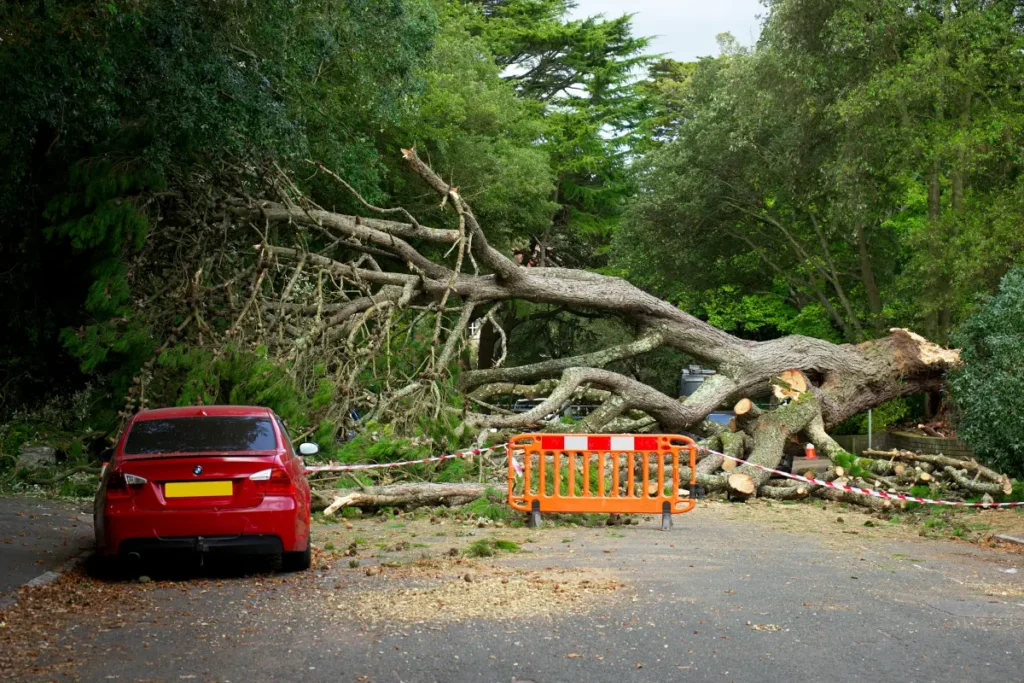
Most home and contents policies cover damage caused by a falling tree and the cost of removing the tree from the insured structure. Fewer cover removal of the remaining tree from the garden, and most exclude damage attributable to a tree that was obviously dead or defective before the storm, which is precisely why maintenance records matter. Document everything: wide and close photographs from multiple angles before anything is moved, video walkthrough, written scope and invoice from the crew, an arborist report on cause of failure where the claim is significant, and official weather records for the event from the Bureau of Meteorology.
Councils, street trees and boundaries
If the failed tree is a street tree or on council land, report it to your council rather than engaging a contractor; the City of Sydney reporting process is a representative example. If it is a neighbour’s tree, the Trees (Disputes Between Neighbours) Act 2006 governs liability and NCAT hears unresolved matters. Make the site safe first and argue about who pays afterwards.
Reducing the odds before the next storm
Most failures are foreseeable. Have significant trees inspected every two to three years, remove deadwood, reduce end-weight on over-extended limbs, address included unions and cavities early, and avoid compacting or filling over root plates. Monitor severe weather warnings from the Bureau of Meteorology, and if your property is bush fire prone, coordinate vegetation work with NSW Rural Fire Service requirements. Save an emergency arborist’s number in your phone now, because at 11pm in a howling southerly you will not be in a position to compare three quotes.